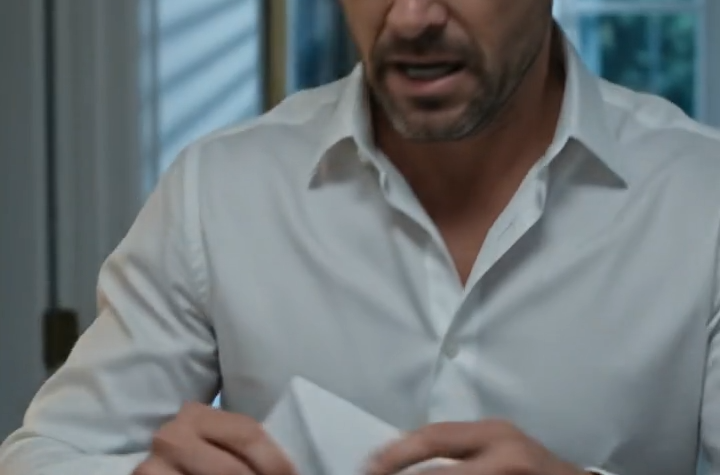
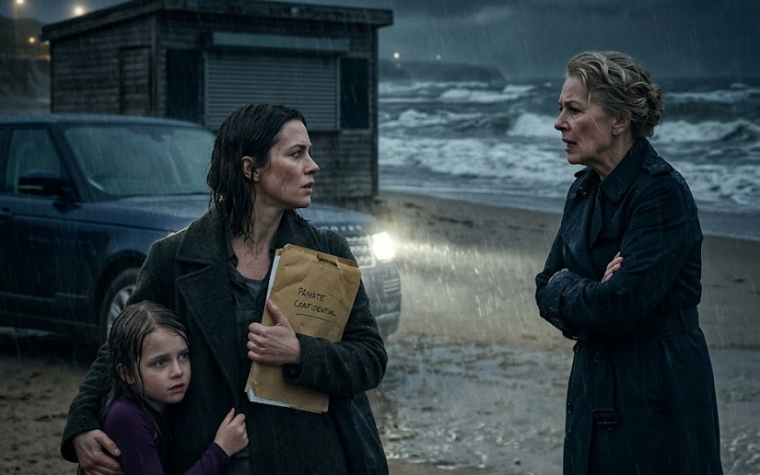
“Yes,” he said.
“We do.”
The legal cases continued for months.
A forensic audit found that Richard had diverted more than fourteen million dollars through consulting contracts, licensing fees, and shell entities.
Some of the money had funded the lifestyle he used to convince investors that the company was thriving.
Martin Vale admitted preparing false acknowledgments and cooperating in the attempted document substitution.
In exchange for consideration in his own case, he provided messages showing Richard directed the scheme.
Lauren surrendered her devices.
Her records confirmed the custody plan, the payments to the evaluator’s intermediary, and Richard’s effort to pressure Isabella into signing a complete release of the platform.
The evaluator denied accepting a bribe, but the investigation found undisclosed payments to a consulting partnership controlled by his business associate.
His report was excluded, and his professional board opened a disciplinary case.
Richard was removed as chief executive by the independent board.
Investors sued him for misrepresentation.
Prosecutors charged him with fraud, forgery, obstruction, and conspiracy-related offenses.
He later entered a plea agreement that required restitution and included a prison sentence.
The divorce court invalidated the prenuptial agreement after finding fraudulent substitution and material nondisclosure.
Isabella received primary custody, control of the residence held by her trust, reimbursement of legal fees, and an equitable share of the marital assets that remained after restitution claims.
She did not ask the court to erase Richard from the twins’ lives.
She asked for boundaries.
Supervised visits continued while he completed counseling and complied with court orders.
Isabella never told the boys that their father did not love them.
She told them adults sometimes made selfish choices and that love did not excuse harm.
Lauren left the city before the criminal hearings concluded.
The bracelet remained in an evidence bag until it was returned to Isabella months later.
She did not wear it again.
She sold it and donated the proceeds to a legal clinic that represented parents facing coercive financial control during custody disputes.
The company survived under a new name and a new board.
Isabella returned as chief architect, not because she wanted Richard’s spotlight, but because she wanted responsibility for what her work became.
Employee credits were restored.
Early engineers whose contributions had been erased received equity.
Compliance systems were rebuilt.
The trust renewed the technology license under stricter protections.
At the first company meeting after the restructuring, Isabella stood on the stage Richard once treated as his throne.
She did not tell the audience she had defeated him.
She displayed the original development team photograph and read every name.
Then she said, “Nothing valuable is built by one person, and no honest future begins with a stolen past.”
Months later, Isabella sat at her kitchen table after the twins had gone to sleep.
The old envelope lay open before her.
Most of its documents were now stored in a secure archive, but one folded page remained.
It was the note from her mother.
Isabella had read the first line many times.
That night, she turned it over and noticed faint writing on the back.
Silence is not surrender, her mother had written.
But do not stay silent so long that someone else teaches your children a lie about who you are.
Isabella pressed the paper flat with both hands.
For years, she had believed dignity meant enduring cruelty without reacting.
Richard had mistaken that restraint for weakness.
In truth, restraint had given her time to observe, preserve evidence, and choose the room in which the truth would finally be heard.
The next morning, the twins found her making breakfast.
One of them pointed to the envelope on the counter.
“Is that the paper that saved us?”
Isabella looked toward the window, where her father was helping the other boy repair a crooked birdhouse in the yard.
“No,” she said.
“The paper helped people see the truth.”
“What saved us?”