Government contractors wanted it.
Isabella wanted control over how it was used.
Richard wanted a company.
When they met, he was persuasive, ambitious, and attentive in a way that made her feel visible after years of conflict with her powerful family.
He said he did not care about the Del Castillo name.
He admired her mind.
He wanted to build something with her, not inherit something from her.
She believed him.
The trust granted their new corporation a conditional license.
Richard received a minority interest and the title of chief executive.
Isabella retained ownership of the core architecture through the trust.
The license contained three critical restrictions: the technology could not be transferred to another entity without written approval, the corporation had to provide annual audits, and any fraud by an officer automatically terminated the license.
Richard knew every condition.
His signature appeared beneath them.
For the first four years, the arrangement worked.
Isabella led development while Richard raised money and became the public face of the company.
When the twins were born, she stepped back from daily operations.
Richard began describing that decision as proof she had never been involved.
He removed her name from presentations.
He reassigned engineers who reported to her.
He told new investors he had written the original code in a rented apartment.
At home, he told Isabella that correcting him publicly would make the company look unstable.
“We know the truth,” he would say.
“Why do you need strangers to applaud you?”
Gradually, the history changed because Richard repeated his version more often than she defended hers.
The judge examined the prenuptial agreement.
It identified her as Maria Castillo, the name she had used socially after separating from her family.
The attached disclosure stated that she owned no patents, business interests, trusts, or intellectual property.
“Did you sign this disclosure?” the judge asked.
“I signed a different schedule,” Isabella said.
“Mine listed the research trust and the licensing agreement.
Richard told me his attorney needed a simplified copy for formatting.
The version attached to the final prenup was substituted after I signed the signature page.”
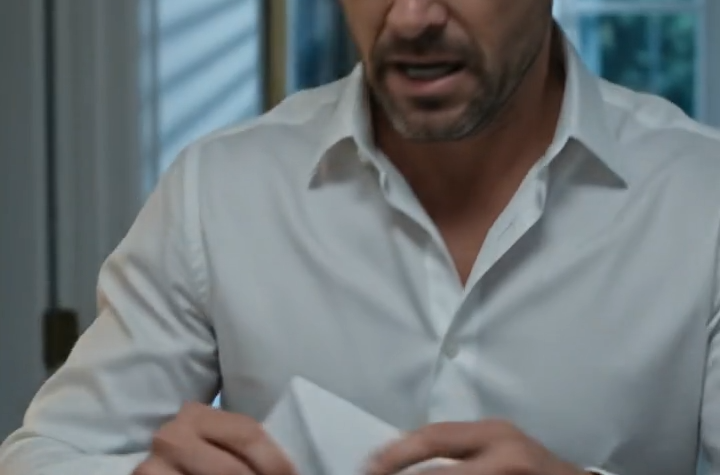
Richard slammed a palm against his table.
“That is a lie.”
The judge’s eyes narrowed.
“Another outburst will result in contempt.”
Isabella removed a second set of papers from the envelope.
They were carbon copies of the original disclosure, dated two days before the prenup was notarized.
Her mother’s attorney had insisted she keep them.
The listed assets matched the trust records.
The signature page matched the page attached to the prenup, but the schedules did not.
A faint handwritten number appeared in the lower corner of every original page.
The replacement pages had no number.
Richard’s former attorney had once used that numbering system to prevent substitutions.
The judge compared the copies.
“Who possessed the original package after you signed it?”
“Richard.
He said he would deliver it to the notary.”
All attention shifted toward him.
He shook his head.
“We were getting married.
I handled paperwork.
That doesn’t prove fraud.”
The clerk opened another file from the drive.