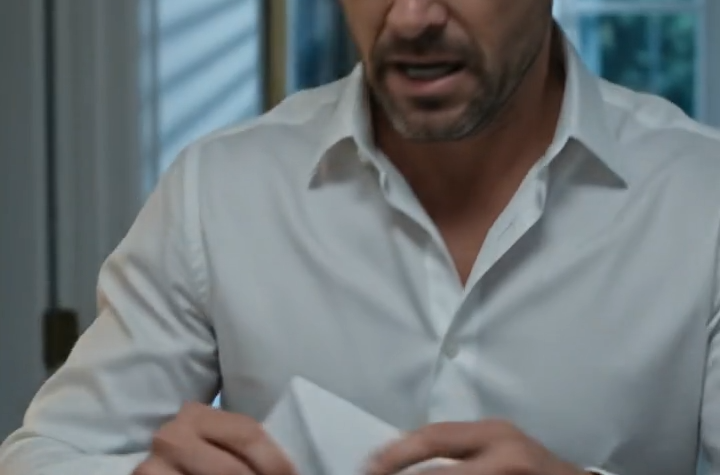
One investigator collected the false codicil using an evidence sleeve.
“Then the evidence will clarify it.”
Tabitha began speaking before anyone asked her a question.
She blamed Calvin, then Kyle, then Dad’s medication.
Every new explanation contradicted the one before it.
Calvin said nothing as he was escorted from the room.
At the doorway, he looked back at me.
“You set me up.”
I thought of Dad hiding the envelope beneath the roses, enduring Calvin’s threats while preparing the truth.
“No,” I said.
“My father let you finish.”
The criminal investigation lasted several months.
Digital records showed Calvin had created the false codicil on his office computer.
Messages between him, Tabitha, and Kyle documented their plan to pressure Dad, replace Penelope as executor, and sell the house through a company connected to Calvin.
Calvin eventually pleaded guilty to forgery, attempted theft, and conspiracy.
Tabitha accepted a separate plea after cooperating with investigators.
Their marriage ended before sentencing.
Kyle admitted his role from the beginning.
His cooperation reduced his punishment, but it did not erase what he had done.
He received probation, community service, restitution obligations, and mandatory financial counseling.
A week after his hearing, he came to the garden carrying Dad’s old pruning shears.
“These were in my garage,” he said.
“He lent them to me last spring.”
I took them without inviting him inside.
Kyle stared at the white roses.
“I’m sorry.”
“I know.”
“Do you think you’ll ever forgive me?”
The easy answer would have been yes.
Dad believed in family, second chances, and tending damaged things patiently.
But he also believed thorns had a purpose.
“Maybe,” I said.
“Forgiveness is not the same as trust.”
Kyle nodded, tears gathering in his eyes.
“I understand.”
“You’ll have to prove that over time.”
He left without arguing.
The house never became Calvin’s investment or Tabitha’s remodeling project.
The stone remained unpainted.
My childhood bedroom remained a bedroom.
Not one rose bush was removed.
The following spring, I opened part of the garden to a local hospice foundation.
We created a quiet place where families could sit between appointments, drink tea, and remember people they were afraid of losing.
Near the wooden bench, I placed a small brass plaque bearing one of Dad’s favorite lessons:
STEADY HANDS.
NEVER CRUEL.
On the first anniversary of his death, I sat beneath the roses with his final letter.
The rest of the message had been inside the metal box beneath the bench.
I had been unable to read it until then.
Dad wrote that he regretted trusting Calvin for so long.
He regretted failing to recognize Kyle’s desperation sooner.
Most of all, he regretted that I had spent years believing calmness made me weak.
“You were never weak, Paige,” he had written.
“You simply refused to become cruel in order to survive cruel people.
Guard that part of yourself.