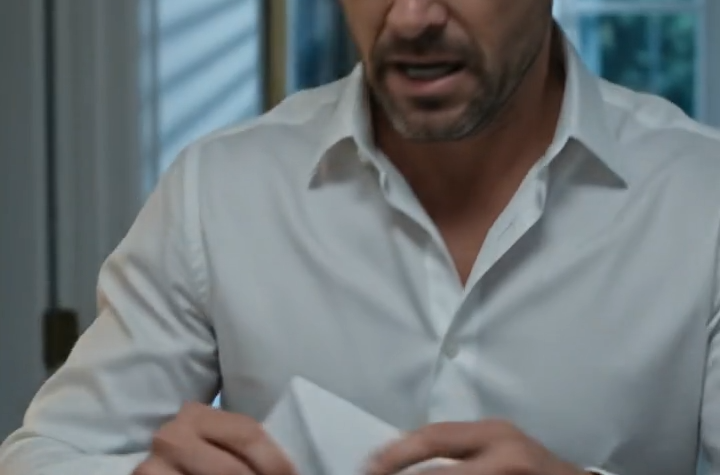
Marcus’s face did not change until the judge revoked his release and ordered deputies to take him into custody.
As an officer approached, he turned toward Chloe.
She did not lower her eyes.
The state bar suspended his license immediately and later disbarred him after disciplinary proceedings established that he had misused firm resources, obtained confidential information under false pretenses, and attempted to manipulate the justice system for personal protection.
His firm settled Chloe’s civil claims relating to the investigator’s conduct and adopted new oversight rules.
At sentencing, Chloe delivered a statement.
She did not call Marcus a monster.
She did not describe herself as broken.
She spoke about choices.
“You told me your title made you powerful,” she said.
“But your power depended on closed doors, missing phones, frightened witnesses, and my silence.
The moment the doors opened and the evidence spoke, there was nothing impressive left.”
The judge imposed a substantial prison sentence, followed by supervised release and a permanent protective order.
She noted Marcus’s repeated planning, abuse of professional knowledge, and refusal to accept responsibility.
Afterward, reporters waited outside.
Chloe did not give them a triumphant statement.
She walked past the cameras with Elena on one side and her father on the other.
I followed several steps behind.
At home, the cream blouse she had worn that first afternoon still hung in the guest room closet.
Months later, Chloe took it down.
She held it for a long time, then folded it into a donation box.
“I used to think this shirt protected me,” she said.
“It helped you survive until you reached a safe place,” I replied.
She considered that and nodded.
The following spring, Chloe moved into a small house with wide windows and a blue front door.
She chose every lock herself.
Not because she expected danger, but because the decisions were hers.
On the day she moved in, my husband carried boxes while Elena assembled a bookshelf badly enough to make us all laugh.
Chloe stood in the center of the living room surrounded by unopened cartons and sunlight.
For years, Marcus had told her that no one would believe her.
In the end, belief had not come from my title, his reputation, or a dramatic speech.
It came from bruises documented carefully, recordings preserved lawfully, witnesses willing to speak, and Chloe finding the courage to tell the truth more than once—to a doctor, an investigator, a judge, a jury, and finally herself.
That evening, she locked the blue door and slipped the key into her own pocket.
Then she turned toward us without flinching.