Now I saw it differently.
It was proof of where their story ended.
Mine had continued through chemotherapy, adoption hearings, late-night studying, failed exams, second attempts, research labs, hospital rounds, and every frightened child whose hand I had held because I remembered what it felt like to watch a door that never opened.
A week later, the family support foundation informed me that it had received an anonymous donation large enough to cover transportation and temporary housing for several pediatric cancer families.
I never asked who sent it.
Forgiveness was not the same as access.
Consequences were not the same as revenge.
I did not need Robert and Linda to become better people in order to become whole.
Months later, I began my pediatric oncology residency in the same kind of ward where my childhood had changed.
On my first overnight shift, a terrified thirteen-year-old girl asked whether her mother would come back after meeting with the billing office.
I pulled a chair beside her bed.
“I don’t know what anyone else will do,” I told her.
“But I am staying right here until she returns.”
The girl nodded and closed her eyes.
Her mother came back twenty minutes later, carrying two cups of vending-machine cocoa and a folder of financial assistance forms.
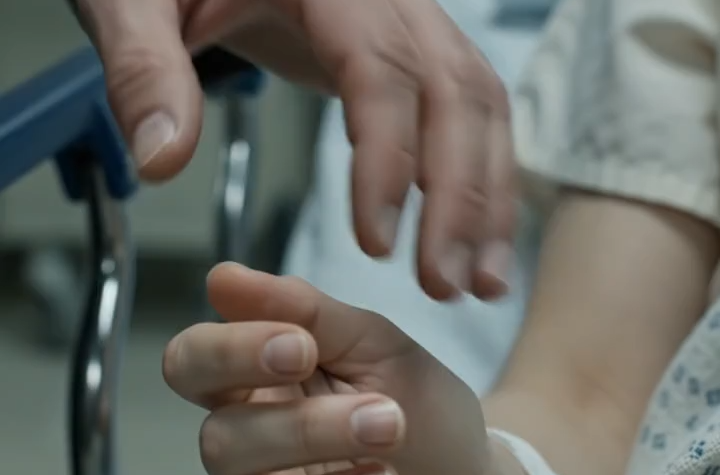
She sat on the other side of the bed and took her daughter’s hand.
I watched them for a moment before quietly leaving the room.
At the nurses’ station, I touched the pendant beneath my scrubs.
R and S.
Rachel and Sarah.
Not a reminder of who abandoned me.
A promise that someone stayed.