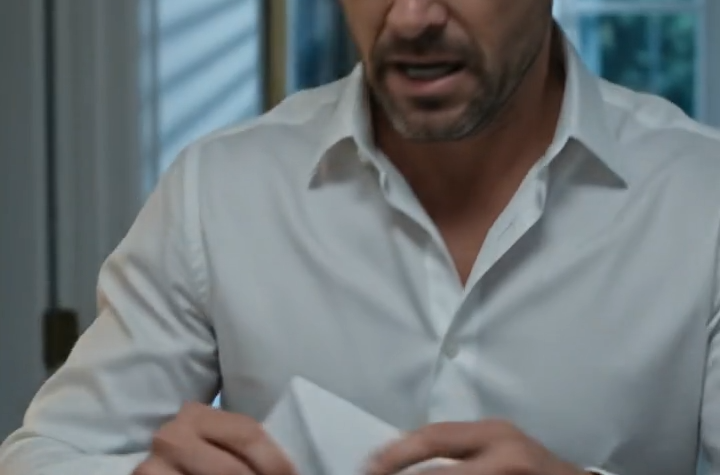
“You brought police to our home?”
“I came for my documents,” I said.
“Our documents.”
“Mine.”
The officer stood by the door while Charlotte waited in the hallway.
I took my passport, birth certificate, work records, the shoebox, my grandmother’s earrings, and the envelope Charlotte had given me.
Andrew followed me from room to room, speaking in a low voice that kept trying to hook into old places.
“You’re embarrassing yourself.”
I folded two blouses into a suitcase.
“You’re not thinking clearly.”
I took my medication from the bathroom cabinet.
“Those people don’t care about you.
They’re using you.”
I zipped the suitcase.
When I finally faced him, he looked almost like the man I had married.
Handsome.
Controlled.
Carefully wounded.
“Vivian,” he said softly.
“One bad argument does not destroy a marriage.”
I thought of the dress turning in the flames.
The phone on top of the refrigerator.
His hand around my wrist.
His voice saying I still had to come home.
“No,” I said.
“But four years did.”
The next morning, Andrew sent thirteen messages before eight o’clock.
Then apologies.
Then threats.
Then a photo of our wedding, cropped so my smile looked happier than I remembered.
I did not answer.
Charlotte connected me with an attorney named Grace Lennox, who spoke plainly and did not flinch when I described the money, the monitoring, the destroyed property, and the public threat.
Grace helped me file for divorce and temporary protections.
She told me to stop calling it overreacting.
“You are reacting,” she said.
“That is different.”
Andrew’s company did not fire him that night.
Life is rarely that cinematic.
But Mark Delaney requested a conduct review, and the promotion Andrew had been courting disappeared before the month ended.
People stopped inviting him into private rooms.
His carefully built image cracked because he had cracked it himself in front of exactly the audience he wanted most.
He tried to tell mutual friends that the Wrights had manipulated me.
Then someone leaked nothing, posted nothing, shouted nothing, and still everyone seemed to know enough.
Reputation does not always die from scandal.
Sometimes it dies from a room full of witnesses going home and telling the truth quietly.
The blue dress could not be restored.
The fabric was gone.
The tailor Charlotte recommended saved only a small piece from the hem that had not fully burned.
I kept it in a frame on my new desk, not because I wanted to remember Andrew, but because I wanted to remember the moment I stopped mistaking destruction for finality.
Three months later, the Second Start Initiative opened its first wardrobe room in a donated storefront behind a legal aid office.
There were no chandeliers.
No gold lights.
No champagne glasses.
Just racks of clean clothes, mirrors that did not distort, and a row of comfortable chairs for women who arrived carrying folders, court notices, children, fear, and hope in whatever order they could manage.
On opening morning, a woman stepped out of the fitting room in a navy blazer and stood very still.