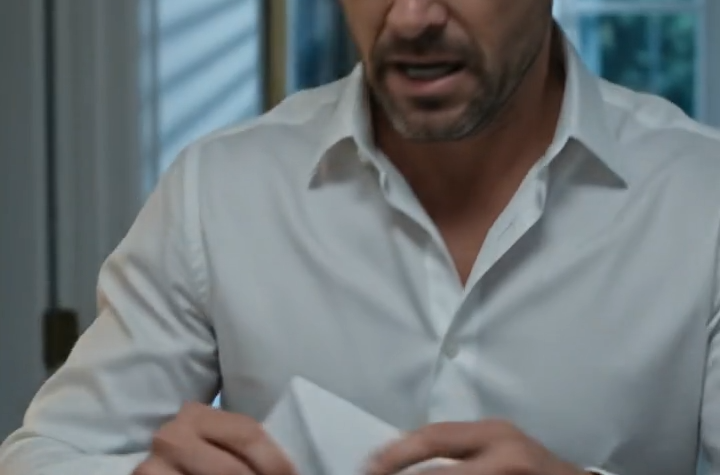
The voice he used when he promised to return her bank cards.
The voice he used while explaining why no one else could be trusted with their private life.
Clare rested both hands over her stomach.
Her baby moved beneath them, a small, undeniable pressure.
“You already tried to destroy our child’s future,” she said.
Detective Campbell led Derek from the room.
He continued talking until the door closed, offering explanations, promises, and threats in the same breath.
Evelyn was taken through another hallway.
She demanded a lawyer and insisted she had known nothing about the insurance policy, despite her name and number on the application.
The investigation widened that afternoon.
Police searched the apartment and found the original property-transfer documents in the fireplace, partially burned.
Clare’s phone was recovered from Derek’s locked desk.
Its deleted recordings included three arguments in which he pressured her to sign over the lake house.
A building employee came forward after seeing news of the arrest.
Two days before Christmas, Derek had asked whether the balcony cameras were operational.
When told that the exterior system had been disconnected during renovations, he joked that the building was “finally private.”
The employee had thought nothing of it at the time.
Derek’s sister, Lauren, changed her story before midnight.
Faced with the video and the forged medical note, she admitted that Derek had announced during breakfast that Clare would sign the papers “one way or another.” Lauren had watched him take Clare’s phone.
She had also heard Evelyn tell him not to leave fingerprints on the balcony door.
Lauren had remained silent because Derek paid her rent and Evelyn controlled the family trust.
Her silence did not make her innocent, but her statement removed the last gap in the timeline.
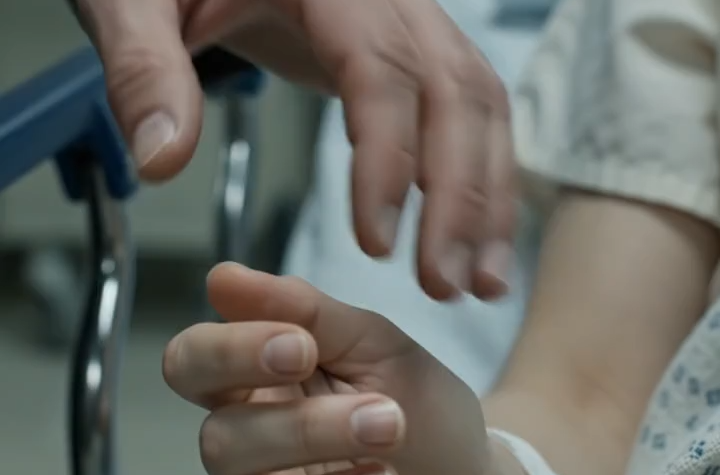
Clare spent the next five weeks in the hospital.
Her pelvis required surgery, and every breath hurt until her ribs began to heal.
Dr.
Reynolds and the obstetric team monitored the baby constantly.
There were nights when Clare woke convinced she was falling again, only to find a nurse adjusting the blanket or Julian asleep in a chair near the window.
He never asked what their survival meant for the two of them.
He never used her vulnerability to reopen the past.
He brought legal updates, fresh clothes, and the cinnamon tea she used to drink when working late.
When she needed silence, he sat without speaking.
One afternoon, Clare asked why he had kept the old email address active.
Julian looked embarrassed.
“Because you designed the first community center my foundation built.
Deleting the account felt like deleting the best thing we did together.”
Their engagement had ended after months of anonymous messages convinced Clare that Julian had been unfaithful.
She had never seen proof, only screenshots and carefully timed photographs.
Derek, then a sympathetic colleague, had helped her through the breakup.
Martin’s investigators later traced the anonymous messages to an account created from Derek’s former office computer.
That discovery hurt differently from the fall.
Derek had not simply entered Clare’s life after Julian.
He had manufactured the opening.
Clare gave herself permission to grieve without confusing grief with regret.
She could not recover six stolen years, but she could decide who controlled the years ahead.
At thirty-four weeks, complications forced the doctors to deliver the baby early.
Clare was awake during the procedure.
When a small, furious cry filled the operating room, she covered her face and sobbed.
Her daughter weighed four pounds, twelve ounces.
Clare named her Hope, not because survival had erased what happened, but because survival had made another future possible.
Derek was charged with attempted murder, aggravated assault, insurance fraud, forgery, financial theft, and witness tampering.
Evelyn faced conspiracy, fraud, evidence fabrication, and obstruction charges.
Both initially pleaded not guilty.
The trial began eight months later.
Derek arrived in a tailored suit and tried to present himself as a grieving husband trapped by a sensational misunderstanding.
His attorney argued that the dashcam distorted distance and that Clare’s injuries affected her memory.