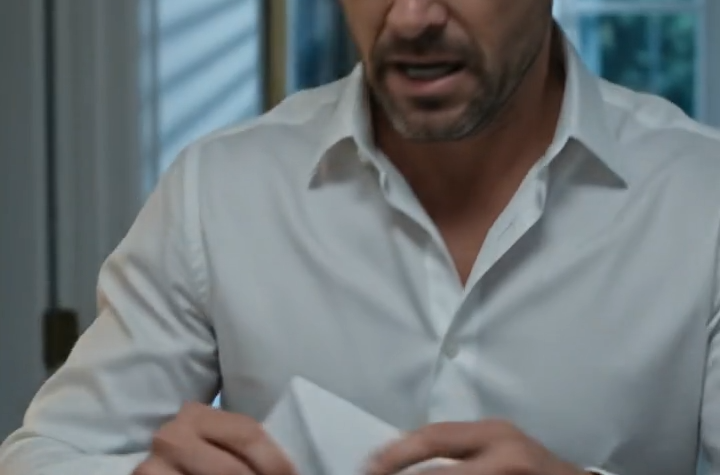
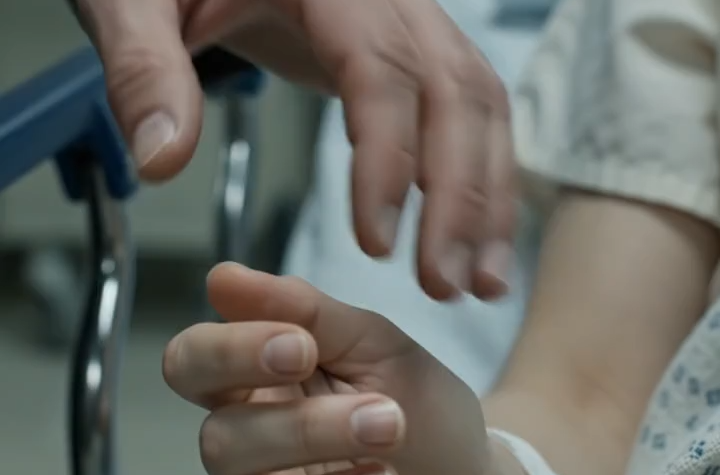
The screen behind Dean Jonathan Bradley brightened, and my face appeared above the stage in a photograph taken for the university’s honors program.
Beneath it were the words my family had never expected to see: DR.
CLARA HENSLEY — VALEDICTORIAN, KEYNOTE SPEAKER, CLINICAL RESEARCH GRANT RECIPIENT.
For one suspended second, the grand hall was silent.
Then applause rolled through the room.
From behind the curtain, I watched the gold VIP ticket slide from Haley’s fingers and land beneath her chair.
My stepmother’s polished smile disappeared.
My father sat rigidly beside them, his face drained of color.
Dean Bradley turned toward the curtain and extended his hand.
My wet clothes had been replaced with a dry black dress and an academic gown borrowed from the faculty wardrobe.
Someone had wrapped a towel around my hair and pinned it back.
The red marks from my father’s grip were still visible around my wrist, but I did not cover them.
I stepped into the light.
The applause grew louder.
Students I had studied beside for four years stood first.
Professors followed.
Nurses from the teaching hospital clapped from the balcony.
Members of the Board of Trustees rose near the stage.
My family remained seated.
I walked toward the podium slowly, carrying the blue speech folder that bore my name in silver letters.
My hands were steady now.
Dean Bradley leaned toward the microphone.
“Dr.
Hensley completed her medical degree while working demanding hospital shifts and leading a research team focused on identifying early warning signs in rapidly deteriorating patients.
Her work has already been adopted in a pilot program across three clinical wards.”
Another wave of applause moved through the hall.
I looked toward the front row.
Haley was staring at me as though I had become a stranger.
My stepmother whispered something into my father’s ear, but he did not respond.
He was looking at the program in his lap, finally reading the biography printed beneath my photograph.
Four years of work had been summarized in six lines.
Four years he had never asked about.
When I began medical school, I had tried to tell him.
I had come home with my acceptance letter folded carefully inside my bag, but Haley had announced that she was launching a lifestyle channel that evening.
My father spent dinner discussing camera equipment, branding, and the kind of car she should lease to look successful.
When I finally mentioned the acceptance, he barely glanced at the letter.
“Medical school is expensive,” he said.
“Be realistic.
You already have a hospital job.
Keep it.”
That hospital job was a clinical support position I had taken before my first semester.
It paid enough to cover transportation, textbooks not included in my scholarship, and part of the household groceries my father expected me to buy.
He assumed the job was the limit of my ambition.
I stopped correcting him after the first year.
My stepmother liked telling friends that Haley was the family’s future entrepreneur while I was the dependable one who cleaned up after everyone.
If I came home wearing scrubs, they saw an assistant.
If I carried medical textbooks, they assumed I was taking a certification course.
When I left before dawn for surgical rotations, they complained that I had not prepared breakfast.
Their indifference became a kind of camouflage.
It hurt, but it also protected the quiet life I was building beyond their reach.
At the podium, I opened my speech folder.
I did not mention my father.
I did not describe the rain, the stolen ticket, or the way my garment bag had fallen into a puddle after he shoved me.
Instead, I spoke about being unseen.
“Hospitals are full of people whose suffering is easy to overlook,” I said.